September 9, 2026 · 7 min
Tank inspection: an honest map of who inspects what
The generic search lands on one page, but the work belongs to half a dozen trades. Here is the whole territory, including the large parts of it that are not ours.
When we pulled the numbers behind the generic query `tank inspection`, the most useful finding was about everything this site is not. The biggest volumes in the category belong to other trades entirely, and pretending otherwise would waste your click. So here is the map, drawn honestly, with the measured numbers attached.
Septic tanks: the giant of the category
`septic tank inspection` is searched 49,500 times a month, more than every steel tank query combined many times over. It is plumbing and onsite wastewater work, done by licensed septic contractors, frequently tied to a property sale. Nothing on this site will help you with it, and any steel tank company that buys that traffic is wasting your time and its money.
Propane, scuba and other pressure vessels
`propane tank inspection` is searched 8,100 times a month and `scuba tank inspection` 480. Both are pressure vessel worlds with their own requalification rules, their own stamps and stickers, and their own certified facilities. A propane supplier or a dive shop is the right door. An atmospheric storage tank inspector is the wrong one, and that includes us.
The steel storage tank: our part of the map
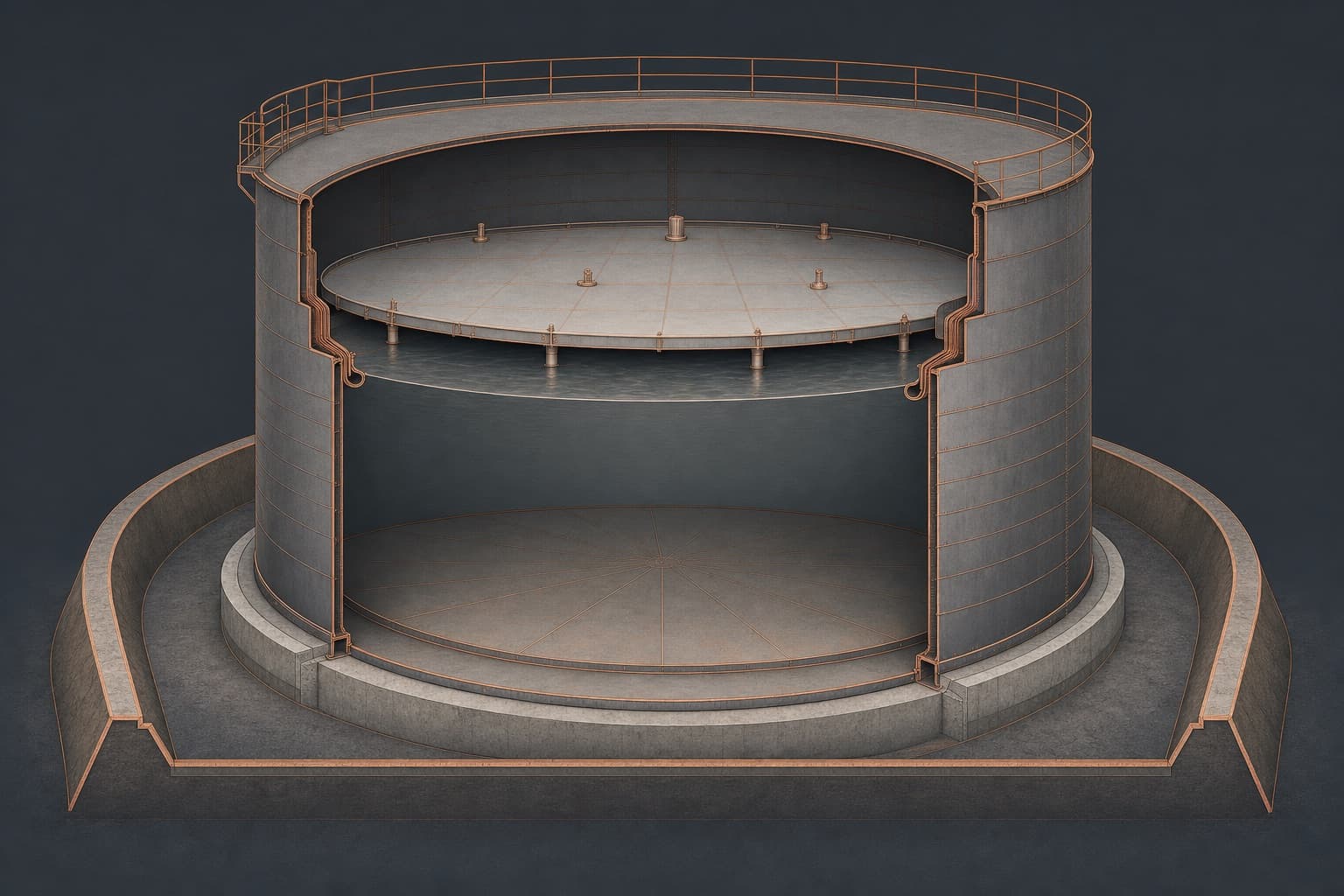
Welded steel tanks storing oil, fuel, chemicals or water at atmospheric pressure. The field-erected ones are examined under API 653 and its three examinations, the shop-fabricated ones under STI SP001 and its categories, and the work is examination and measurement: shell, roof, bottom, foundation, thickness readings, and a report that derives the next due dates. That work is described on aboveground tank inspection and throughout this series.
Within that part of the map there are two distinct activities, and confusing them is the commonest mistake owners make. The routine walk, done by the owner’s own people, detects change: a new stain, a lifted coating, water standing where it should not. The formal inspection, signed by someone qualified to sign, establishes condition with instruments and produces the dates. A program needs both, and neither substitutes for the other.
Water tanks: the same steel, extra rules
A potable water tank corrodes like a fuel tank but answers to the drinking water program as well: approved coatings, disinfection before return to service, notification. The differences are set out in the water storage tank article, and they change the scope rather than the method.
Underground tanks: testing, not examination
A buried tank cannot be walked or measured by eye, so its world is built on tightness testing, release detection and state environmental programs, done by testers certified under those programs. We do not do that work, and underground versus aboveground tank inspection explains the whole distinction and where to go instead, while what belongs on a UST walkthrough checklist covers the operator’s own side of it.
The same warning applies in miniature to buried residential heating oil tanks, which are frequently outside the federal rules but inside state and municipal ones, and which surface most often in real estate transactions. Environmental consultants and licensed tank contractors are the right trade there, and the state agency keeps the lists. How one oil tank search splits across three trades is set out in oil tank inspection: three different jobs.
How to route yourself in one question
What does the tank hold, and can you see it? Wastewater: septic contractor. Gas under pressure: the supplier or a requalification facility. Liquid at atmospheric pressure in a tank you can see: a storage tank inspector, which is us. Liquid in a tank you cannot see: your state environmental agency’s list of certified testers.
The edge cases are worth naming because they generate most of the wrong calls. A tank in a vault or partially buried: which regime applies depends on your state program’s definitions, and it is worth a phone call before assuming. A generator fuel tank: storage tank work, with fire code expectations possibly layered on top. A hot water heater or a pressure tank on a well: plumbing, not us.
Why we publish the numbers
The measured cost per click on this generic query is $8.80, and most of the people paying it are catching visitors they cannot serve. Our position, stated in the first article of this series and unchanged since: capturing a query we cannot serve is worth nothing. A map that sends five of six readers somewhere else, correctly, is worth more than a page engineered to keep all six. If your tank is the sixth, the one we can serve, the rest of this series describes the work in detail, examination by examination.
Ours is the steel storage tank
If your tank holds oil, fuel or water and stands on the ground, describe it and we will scope it.
Steel Tank Inspection carries out API 653 and STI SP001 inspections on welded steel storage tanks: external and internal examinations, ultrasonic thickness readings, bottom evaluation, and the report the standard requires.