August 13, 2026 · 6 min
STI SP001: which category your tank falls into, and why it decides everything
Shop-fabricated tanks are not inspected under API 653. The category assigned to them decides what is required, and the category depends on things you can check yourself.
Two of the top queries in this category are for STI SP001 checklists, monthly and annual, at 70 and 50 searches a month with essentially no advertisers competing. That pattern says the people searching are operators trying to run a program correctly, not buyers. This article is written for them.
SP001 applies to a different family of tanks
API 653 governs welded, field-erected tanks. SP001 governs shop-fabricated tanks: the tanks that arrived on a truck. Horizontal and vertical, single wall and double wall, on legs, on saddles, in a vault, or with secondary containment built around them.
Applying the wrong standard is not a paperwork error. It produces a program with the wrong examinations at the wrong intervals, for years, and it is usually discovered by an inspector or a regulator rather than by the owner.
The category is what drives the requirement
SP001 assigns a tank to a category, and the category determines which periodic inspections are required and how often. What decides the category is not the age of the tank or the product in it, but a combination of:
- whether there is a means of release prevention or containment beneath the tank;
- whether the tank bottom or underside can be visually examined;
- whether corrosion protection is present;
- the tank size.
Notice what those have in common: they are all about whether a leak would be seen or contained. A tank whose underside can be inspected and whose spill would be caught is treated very differently from one sitting directly on concrete with nothing under it.
Why the monthly walk matters more here than anywhere else
On a shop-fabricated tank the periodic in-service examination, the monthly or periodic walk by the operator, carries a larger share of the total assurance than it does on a large field-erected tank. The tank is small enough to see all of, so a competent walk finds most of what there is to find.
That is the argument for taking the monthly checklist seriously rather than treating it as a form, and what an operator walk covers and cannot cover applies here in full. The items worth having on it are the ones that change: containment holding water, coating breaking down at supports, corrosion at the contact point between tank and saddle, a vent that has been blocked, a valve that has started to seep, a label that has become unreadable.
The contact point is where these tanks fail
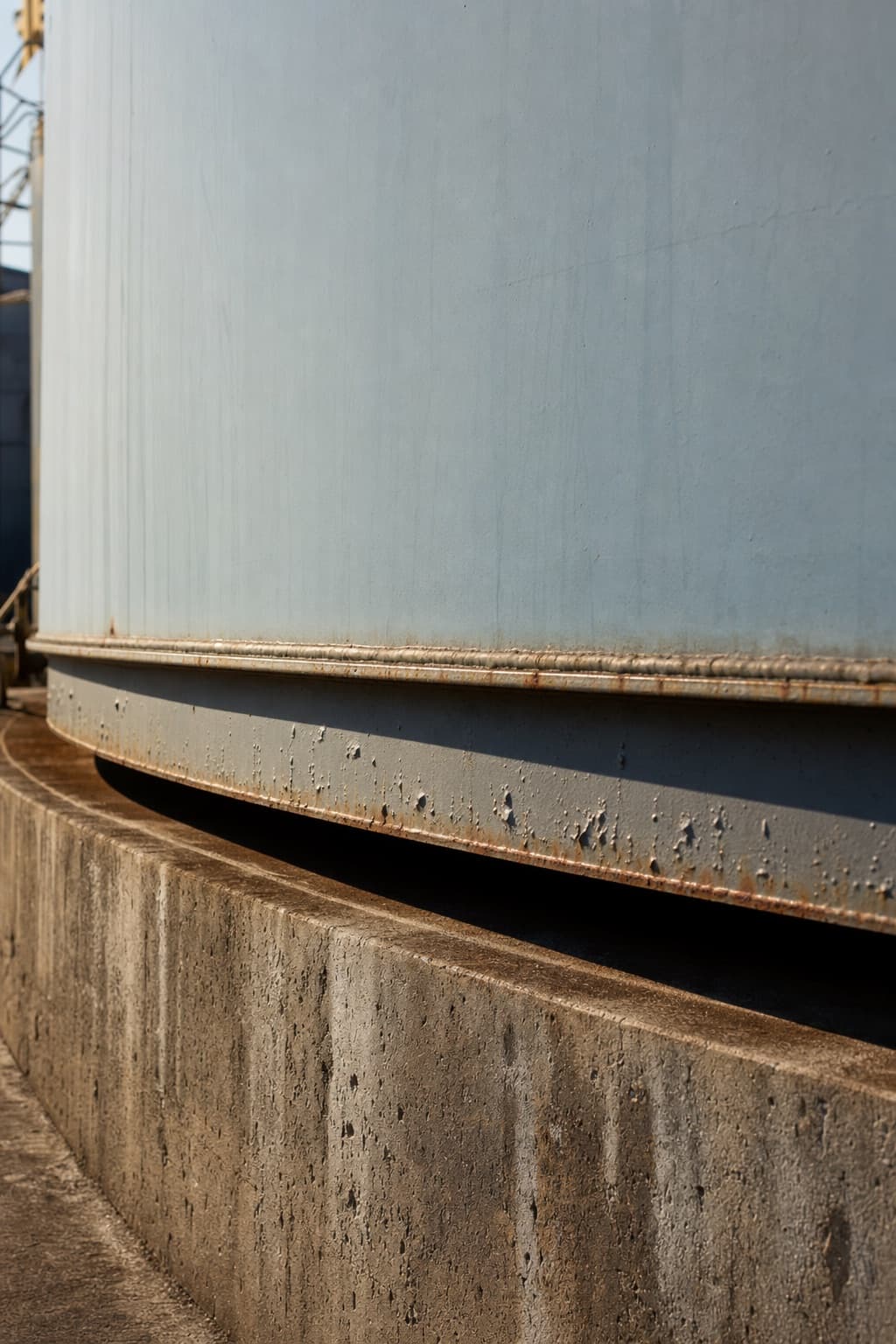
On a horizontal tank on saddles, and on a vertical tank on legs or directly on a pad, the steel corrodes where it touches something. Water sits in the contact, air cannot dry it, coating is thin because the geometry is awkward, and nobody can see it because the tank is resting on it.
That single sentence explains most shop-fabricated tank failures, and it is why the category system cares so much about whether the underside can be examined.
What to confirm rather than assume
Which edition of SP001 your program is written against, whether your state or your SPCC plan imposes anything beyond it, and which category your tank has actually been assigned. The first two come from the four sources that set tank requirements. All three are local answers, and the third is worth a visit rather than a phone call.
Have the category confirmed before you build a program around it
Getting the category wrong means doing the wrong inspections for years. It takes one visit.
Steel Tank Inspection carries out API 653 and STI SP001 inspections on welded steel storage tanks: external and internal examinations, ultrasonic thickness readings, bottom evaluation, and the report the standard requires.