October 19, 2026 · 3 min
Underground propane tank inspection: what can be checked on a tank you cannot see
A buried propane tank shows only its dome. Most of what decides its condition is underground, and it is checked indirectly.
An underground propane tank is a steel pressure vessel buried in soil, with only an access dome at grade. The dome holds the valves, the gauge and the regulator connection. Everything else, the shell and its coating, sits in the ground. Inspecting it is therefore less about looking at the tank than about checking the system that protects it.
What is visible under the dome
The fill valve, the relief valve, the service valve, the gauge and the regulator are accessible. Their condition, the absence of leaks and the state of the dome itself, water, debris, insects, can be checked directly. A dome full of water or soil is the first sign that a tank is not being looked after, and it is easy to see.
Coating and cathodic protection
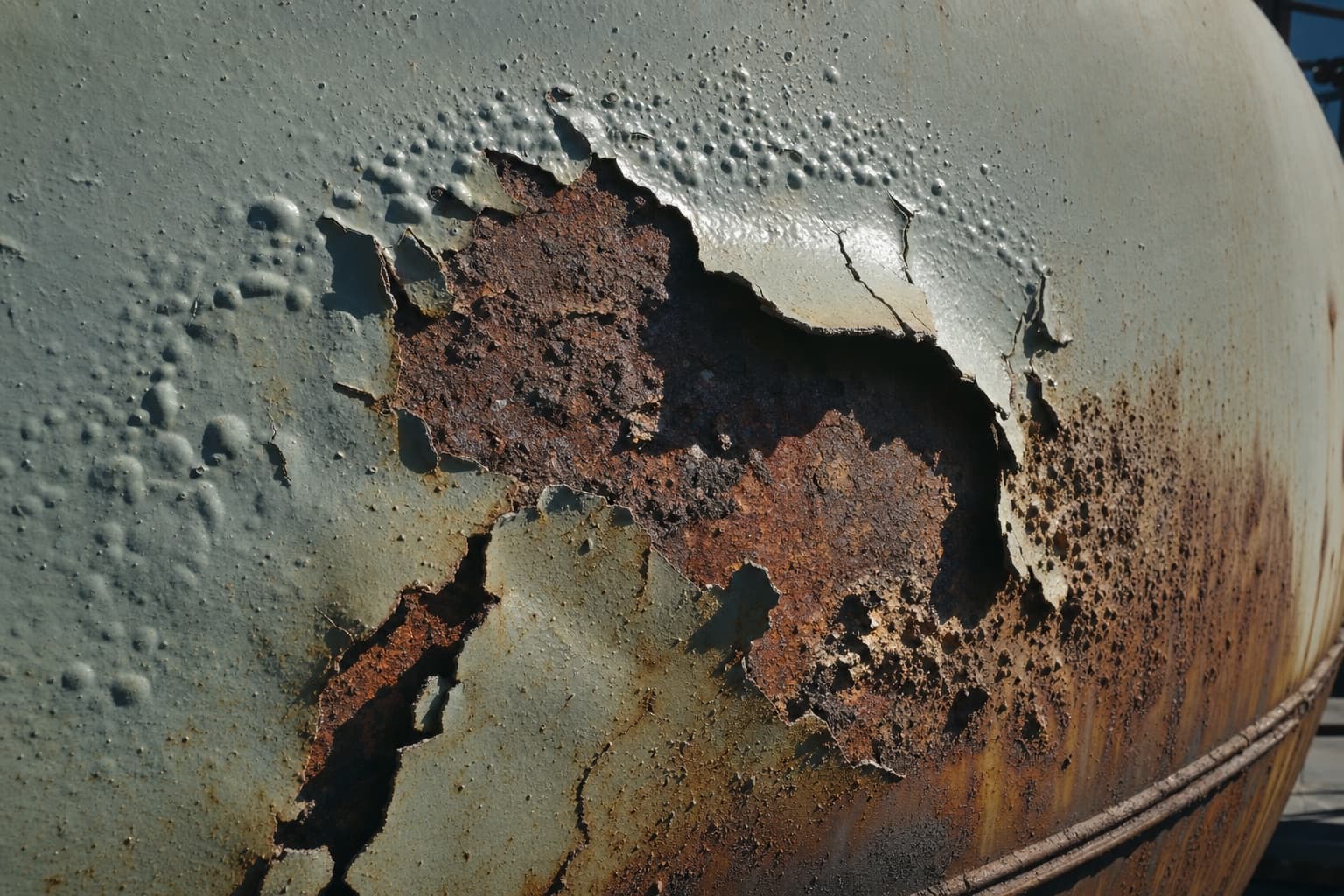
Buried steel corrodes. The tank is protected by a coating and by cathodic protection, usually sacrificial anodes buried with the tank and connected to it. The anodes corrode instead of the tank, and they are consumed over time. Whether the system still works is checked by measuring the tank’s electrical potential against the soil with a reference electrode. A reading outside the expected range means the protection may no longer be doing its job. Corrosion mechanisms in general are covered on corrosion and NDT.
Who usually does it
For most residential underground tanks, the propane supplier owns the tank and is responsible for it, including cathodic protection testing. If you own the tank, ask your supplier what it tests and how often, and ask to see the readings. If nobody can say when the anodes were last tested, that is the answer to the question.
How it differs from a buried oil tank
Buried heating oil and fuel tanks are commonly regulated under state underground storage tank programs, with their own inspection and closure rules. Propane, stored as a liquefied gas under pressure, is usually framed by the fire code and the state LP gas authority instead. The distinction matters when a property is being sold: the questions a buyer’s agent asks about an oil tank do not map directly onto a propane tank. The broader comparison is in underground versus aboveground inspection.
Signs worth reporting to the supplier
A smell of gas near the dome, a gauge that drops between deliveries without matching use, frost on fittings outside of normal operation, or a dome that has shifted or sunk. None of these is a diagnosis, and all of them justify a call to the supplier before anything else. Leaks are not a do it yourself job.
At a home sale
Buyers often ask for an inspection of a buried propane tank and are surprised to learn that the home inspector does not open the dome or test the cathodic protection. The useful documents are the supplier’s ownership record, the latest leak check and the latest cathodic protection reading. If the tank is leased, the new owner will need an agreement with the supplier anyway.
Where the general method applies
The approach that runs through this site applies here in a smaller form: identify the code the tank was built to, who owns it, which rule governs it, and who is qualified to inspect it. The overview of propane tank inspection sets out the three families of propane tanks and how each one is handled.
The same discipline on paperwork applies as well. Keep the readings, the dates and the name of whoever took them. A buried tank cannot be looked at, so the records are the only evidence of its condition that anyone, including a buyer or an insurer, will ever see.
Questions to ask the supplier
When was the last cathodic protection reading taken, and what was it? When was the last leak check, and was the system found tight? Who owns the tank, and is there a written agreement? Are the anodes original, or have they been replaced? Four questions, and a supplier that maintains its tanks properly will answer them from its records without difficulty. An answer that comes back vague is itself useful information for an owner or a buyer.
Not sure which rules apply to your tank?
Describe the tank, what it holds and why the question came up. Four questions, then a call.
Steel Tank Inspection is an independent reference on aboveground storage tank inspection under API 653 and STI SP001. It performs no inspections and signs no reports. It explains what an examination covers, what a compliant report has to contain, and how to verify that the inspector you are about to hire is currently certified.