Aboveground storage tank inspection: what gets looked at over an asset's life
A tank is inspected many times over its life, in several different ways, by several different people. This page places a single inspection inside that whole cycle, because the scope you need depends far more on what was done last time than on what a vendor happens to sell.
The cycle, from the outside in
Four levels of attention, with very different costs and very different findings.
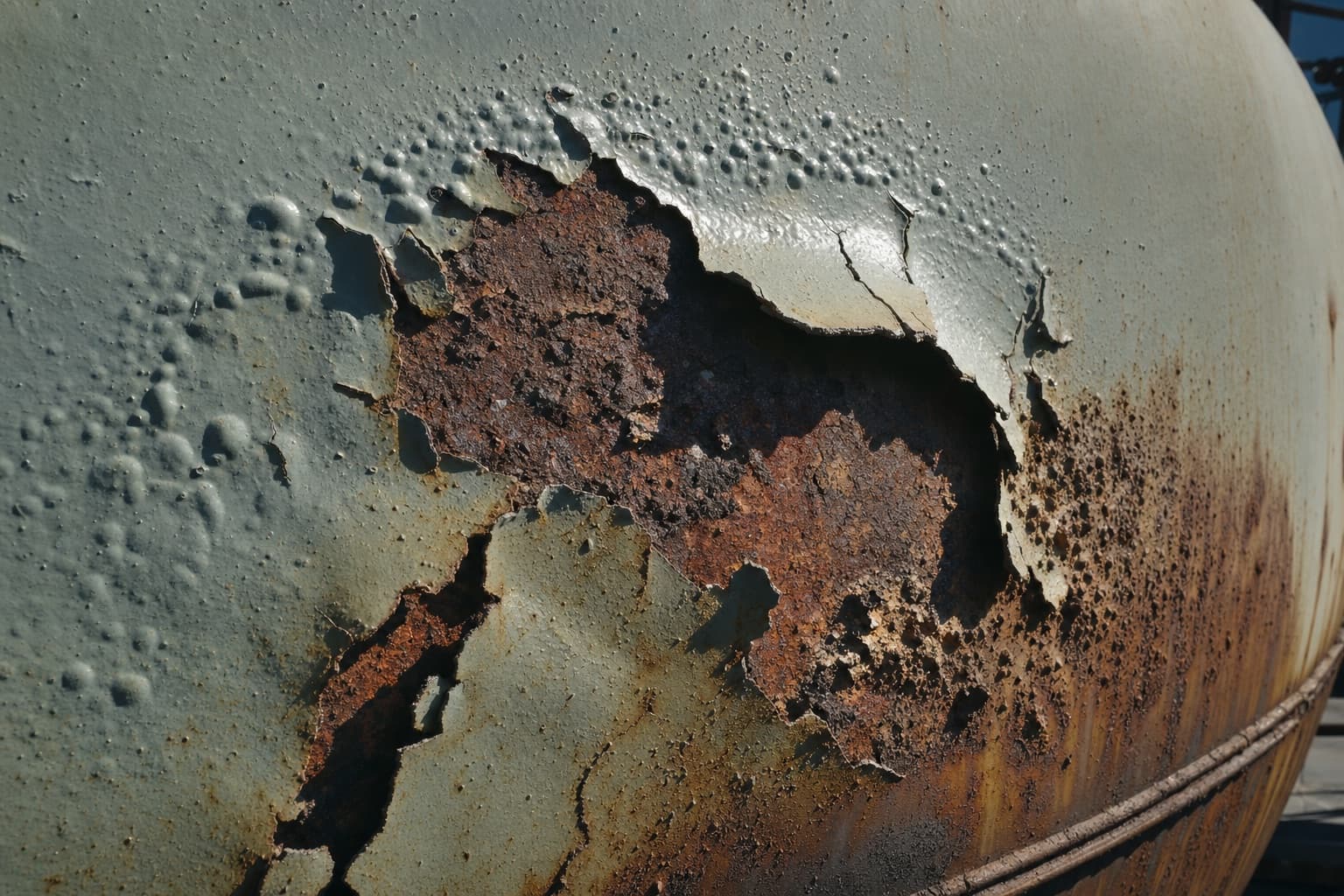
- Frequent walk-arounds by site personnel: leaks, obvious coating failure, foundation washout, blocked vents, damaged appurtenances. Cheap, and the only one that happens often enough to catch a change.
- Formal external inspections by a certified inspector: a structured look at the same things, plus measurement.
- Ultrasonic thickness work: how much metal is left, and where it is going.
- Internal inspection: the floor, the underside of the roof, the internal coating and the parts of the shell nobody can see from outside.
Most owners under-invest in the first level and then buy the fourth in a panic. The cheapest inspection programme in the long run is the one where somebody competent walks the tank farm regularly and writes down what changed.
What triggers an inspection
In practice, one of five things puts a tank on the schedule.
- A due date derived from the previous inspection and its evaluation.
- A regulatory or insurance requirement, or a customer audit.
- A change of service, a different product, a different temperature, a different duty.
- A finding: a leak, a settlement reading that moved, a coating failure, water in product.
- A transaction: due diligence before purchase, lease or divestment of a facility.
The fifth is worth naming because it comes with a schedule nobody controls. A tank inspection inside a deal timetable is priced differently from the same inspection planned a year out.
What the regulatory picture looks like from a distance
Several regimes can touch the same tank at once: federal rules covering oil storage and spill prevention, state programmes that may adopt industry standards directly, fire and building codes, and occupational safety rules governing the work itself.
The workable approach: establish who is asking, then write the scope to satisfy the strictest requirement rather than the average one. It is cheaper than discovering the difference during an audit.
Where the money actually goes
On an internal inspection, the inspection itself is often a minority of the total. Emptying, cleaning, waste disposal and lost throughput dominate, which is set out in detail on what drives the cost.
This is why scope discipline pays here more than in most trades. Buying a slightly better inspection while the tank is already open is cheap. Reopening the tank because the scope was thin is not.
Frequently asked
How often should a tank be inspected?
The interval comes from measured corrosion rates and remaining thickness, not from a calendar rule, see the framework page. Routine visual attention, on the other hand, should be frequent and is largely free.
We have never inspected these tanks. Where do we start?
With an external inspection and a conversation about what the tanks hold and how they are operated. That establishes a baseline and tells you which assets genuinely need an internal inspection first.
Is a leak test the same as an inspection?
No. A tightness test answers one question at one moment; an inspection establishes condition, thickness and remaining life. They are sometimes required together and are not substitutes.
Last reviewed July 29, 2026.
Related pages
- API 653 inspectionUnderstand the framework a bid is written against.
- External inspectionGet value from inspections that do not require an outage.
- Internal inspectionPlan the inspection that costs the most and finds the most.
- Terminals and multi-tank sitesRun a program rather than a series of one-off inspections.
Request an inspection quote
Facility type, number of tanks, product and last inspection. Enough for a provider to say what scope your assets actually need.
Steel Tank Inspection carries out API 653 and STI SP001 inspections on welded steel storage tanks: external and internal examinations, ultrasonic thickness readings, bottom evaluation, and the report the standard requires.