API 653 inspection: what the standard governs, and what it leaves to you
API 653 is the framework most aboveground steel tank inspection work in the United States is written against. It defines inspection types, who is qualified to perform them and what gets recorded, and it deliberately leaves a great deal to engineering judgement. Knowing which is which is what makes two bids comparable.
What the standard is, and what it is not
API 653 is an industry standard covering inspection, repair, alteration and reconstruction of aboveground storage tanks. It sits alongside the construction standard tanks were originally built to, and it is the reference a tank inspection report will cite.
It is not a law. It becomes binding through other routes, a federal or state regulation that adopts it, an insurer that requires it, a lease or supply contract that names it, or a company standard. Which of those applies to your tanks changes what you are obliged to do, and this page cannot tell you which one it is.
The practical consequence: ask whoever is driving the requirement, regulator, insurer, corporate standard, what exactly they require, before writing a scope. Two tanks on the same site can sit under different obligations.
The inspection types, and who performs them
The framework distinguishes several kinds of look at a tank, and confusing them is the single most common source of a mispriced bid.
- Routine in-service inspection, a walk-around performed by facility personnel, at frequent intervals. No outage, no certification, and it catches the obvious things early.
- Formal external inspection, carried out by a certified inspector with the tank in service. Shell, foundation, appurtenances, coating condition, and often ultrasonic readings taken from the outside.
- Formal internal inspection, the tank is emptied, cleaned and entered. This is where the floor is actually assessed, and it is the expensive one.
- Ultrasonic thickness inspection, measurement of remaining metal, which may be scheduled independently of the two formal inspections above.
Certification matters here: formal inspections and the evaluation that follows are the work of a certified inspector, and the report should name the individual and their certification number. What each type establishes is set out on internal inspection and external inspection.
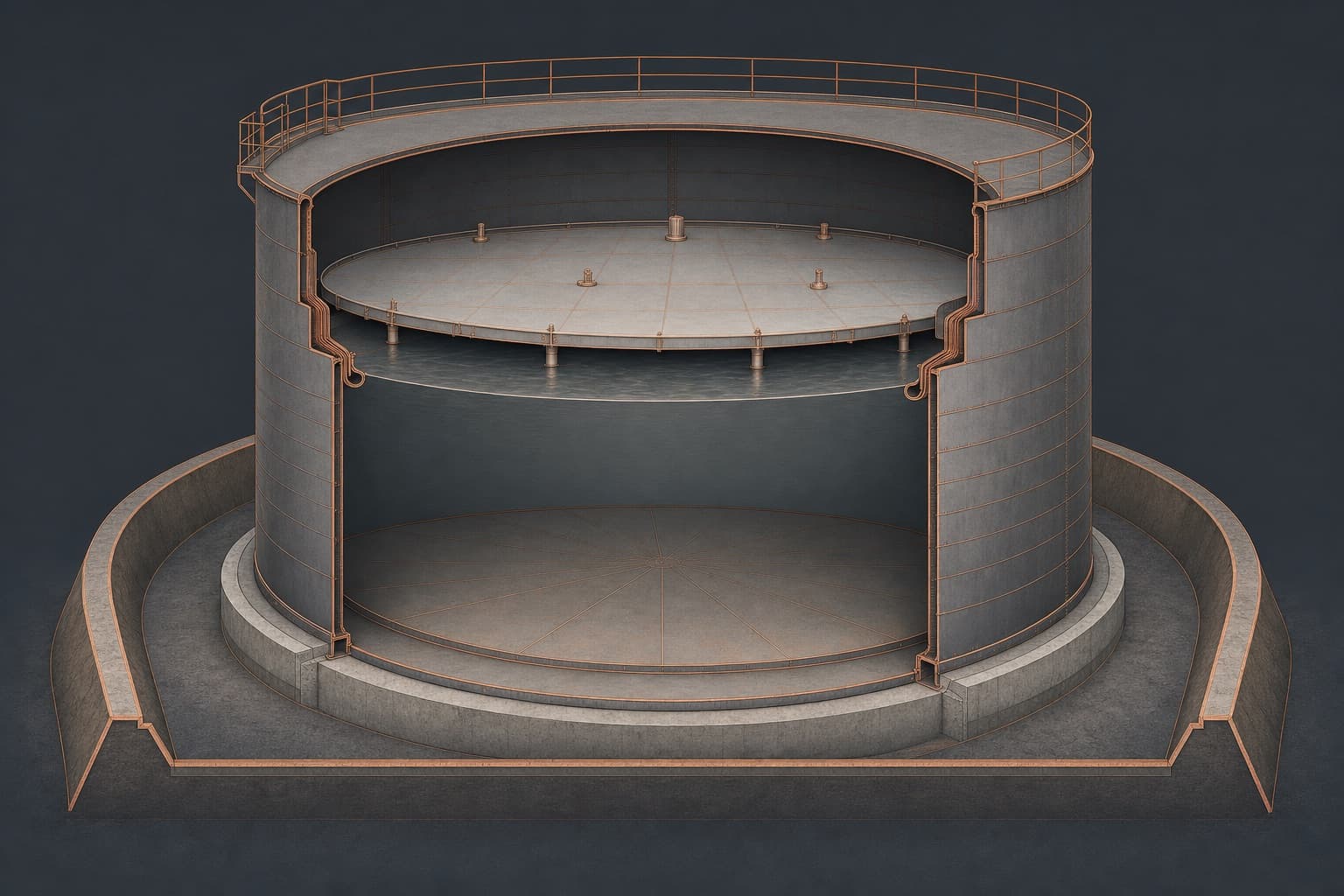
Intervals: the part everyone wants a number for
The question asked most often is how often a tank must be inspected internally. The honest answer is that the interval is calculated, not looked up: it follows from measured corrosion rates, from the remaining thickness relative to a minimum, and from any risk-based methodology the owner has formally adopted.
That is why a tank with a good coating, cathodic protection and clean product can carry a long interval, and an uncoated tank in aggressive service cannot. Two identical tanks on the same bund can legitimately be on different schedules.
What the owner controls is the quality of the data the calculation runs on. That is the argument for the coverage discussion on NDT methods, and for the reporting requirements on integrity assessment.
What a report should contain
A tank inspection produces a document that will be read years later, by somebody who was not there, possibly during an incident investigation. Six things make it useful rather than decorative.
- The inspector's name, certification and the date of each activity, not just of the report.
- The scope actually performed, including what was NOT done and why.
- Thickness data with locations that can be found again, a reading without a position cannot be trended.
- Findings, each with its location, extent and the evidence behind it.
- The evaluation: remaining thickness against a stated minimum, corrosion rates, and the basis of any recommended interval.
- Recommendations separated from requirements, so a reader can tell an opinion from a condition.
The line this site does not cross
This page describes a framework. It does not interpret it for your tanks, does not tell you whether you are compliant, and is not a substitute for a certified inspector or for the authority that regulates your site.
That is not legal caution for its own sake. Applying an interval or an evaluation method to a specific tank is exactly the work the certification exists for, and getting it from a website is how tanks end up mis-scheduled.
Frequently asked
Does API 653 apply to all my tanks?
Not necessarily. It addresses aboveground tanks built to a particular construction standard; smaller shop-fabricated tanks are often addressed by a different framework entirely. [Scope boundaries and the applicable alternative standards to be cited before publication.] A provider will tell you which applies to each asset.
Who can certify an inspection?
A certified inspector, named in the report with their certification number. Ask for it up front: it is a normal question and a fast filter.
Can an inspection be done without taking the tank out of service?
An external inspection, yes. An internal inspection, no, although in-service floor screening methods exist and can inform when an internal is needed. See external inspection.
Last reviewed July 29, 2026.
Related pages
- Internal inspectionPlan the inspection that costs the most and finds the most.
- External inspectionGet value from inspections that do not require an outage.
- Integrity assessmentUnderstand what the engineering half of the deliverable is worth.
- Planning an outageSequence the project so the outage window holds.
Scope the inspection before anyone bids it
Tank type, product, service status and last inspection. Four answers, and providers can quote the same scope instead of four different ones.
Steel Tank Inspection carries out API 653 and STI SP001 inspections on welded steel storage tanks: external and internal examinations, ultrasonic thickness readings, bottom evaluation, and the report the standard requires.