August 17, 2026 · 7 min
Aboveground storage tank inspection requirements: where they actually come from
There is no single list. The requirements on a specific tank are assembled from four sources, they stack rather than replace one another, and two of them are in your own filing cabinet.
People searching for aboveground tank inspection requirements are almost always looking for one authoritative list. The honest answer is that no such list exists. What applies to a specific tank is assembled from four sources, and the two that set the actual dates cannot be read anywhere except in your own documents.
The standard depends on how the tank was built
A welded, field-erected tank that has been in service is examined under API 653. A shop-fabricated tank, the kind that arrived on a truck, is examined under STI SP001. Which one applies decides which examinations are owed, on what logic the intervals are derived, and who is allowed to sign. The examinations themselves are set out in what API 653 actually requires, and the SP001 side in the article on SP001 categories. Getting this first question wrong produces the wrong program for years.
The federal environmental layer
A facility storing oil above the applicability thresholds in the federal regulation may need an SPCC plan, and that plan generally requires integrity testing in accordance with industry standards. In practice the plan usually points back at API 653 or SP001 rather than adding a second set of examinations, but whether it applies at all is a question about the facility and the product, not about the tank, and it has to be answered per site.
The state layer
Some states operate their own aboveground tank programs, with registration, their own intervals and their own triggers. Others adopt the standard as written. A few modify it. Which edition of the standard is in force at your site, and whether the state has imposed anything stricter, are local questions with local answers, and a general statement on any website is not the requirement.
The insurer and the contract
An insurer may require inspection to a standard, on a schedule of its own, as a condition of cover. A buyer or a lender may require a current report before a transaction closes. A terminal operator may impose requirements by contract on every tank inside the fence. These are private requirements rather than regulatory ones, and they are just as real on the day they are checked.
The tank’s own history sets the actual dates
Under both standards, the intervals that matter most are derived from measured condition: the corrosion rate established by previous thickness readings, and the remaining thickness above the calculated minimum. Two identical tanks can owe different examinations on different dates because one has a history and the other does not. How that derivation works is on integrity assessment.
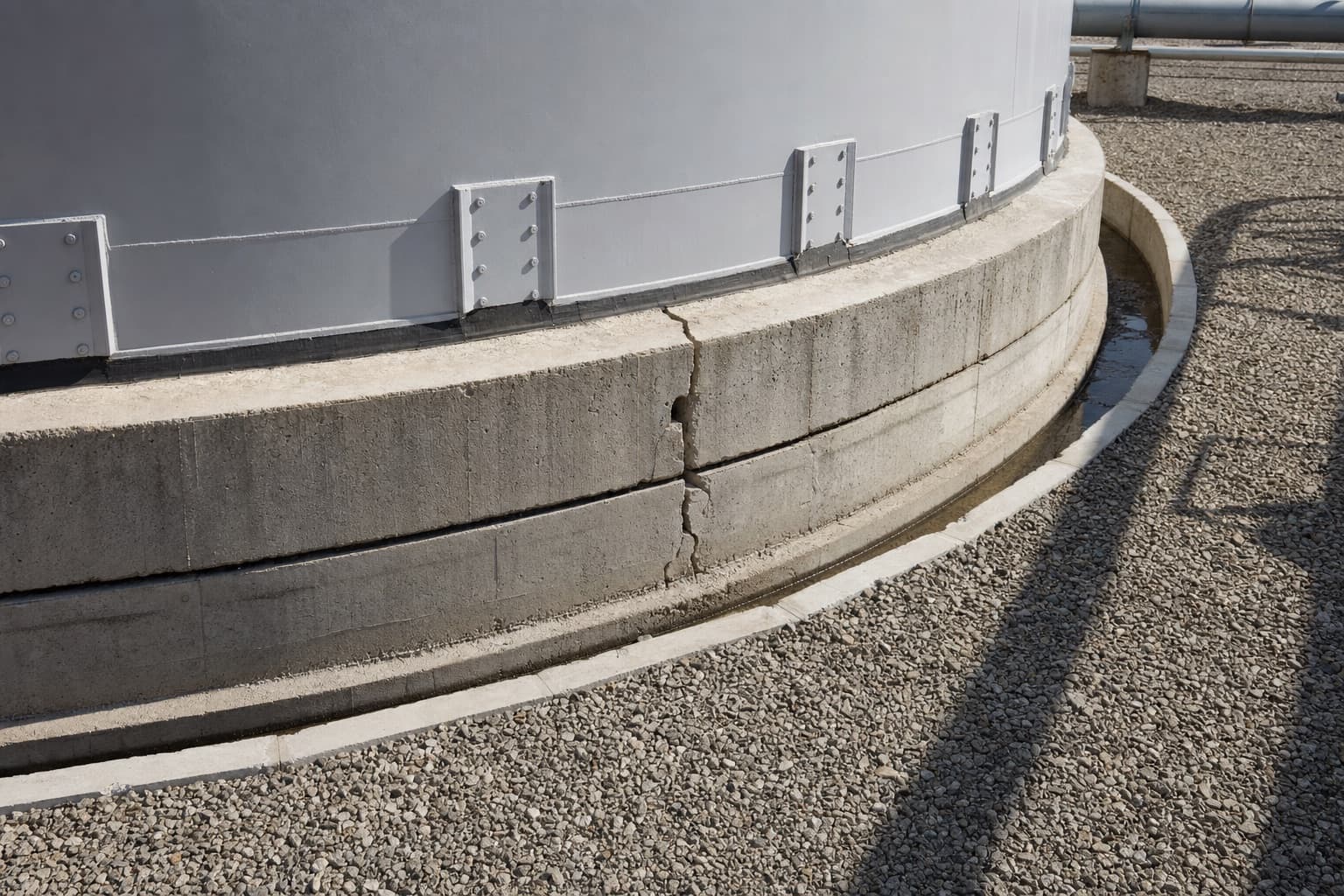
History also produces triggers. A change of service, a repair to the shell or bottom, evidence of settlement, or a return to service after a period out of service can each require an evaluation regardless of the calendar, and the evidence that moves a tank up the list is mostly visible from the ground.
Assembling the list for your tank
One page per tank: the standard and edition that apply, the category or class assigned under it, what the state program adds, what the SPCC plan says, what the insurer requires, and the next due dates as derived in the last report. If the last report states due dates without showing how they were derived, that is the first gap to close, because a date without a derivation cannot be defended when somebody asks, and a certification number is not the same as a defensible report.
What no website can tell you
Everything above is written conditionally, and that is not caution for its own sake. The requirement in force at your site depends on the edition adopted, the state program, the plan and the tank’s own file. Confirming it is part of scoping the inspection, as described in inspection planning, and it happens before the quote rather than after.
Get the requirements for your tank on one page
Standard, state, plan, insurer and history, confirmed against the documents rather than assumed.
Steel Tank Inspection carries out API 653 and STI SP001 inspections on welded steel storage tanks: external and internal examinations, ultrasonic thickness readings, bottom evaluation, and the report the standard requires.