October 23, 2026 · 3 min
Air compressor tank inspection: a pressure vessel that corrodes from the inside
A compressor receiver looks like a simple steel tank. It holds stored energy, it collects water, and its worst damage is on the inside where nobody looks.
The tank on an air compressor, called a receiver, is a pressure vessel. Most receivers are built to the ASME pressure vessel code and carry a nameplate saying so. Because it holds compressed air, a failure releases stored energy all at once. That is why receivers in workplaces fall under state boiler and pressure vessel programs in many states, and why their inspection deserves more attention than it usually gets.
Why receivers corrode from the inside
Compressing air concentrates the moisture it contains. As the air cools in the receiver, that moisture condenses and collects at the bottom. Water sitting on bare steel corrodes it, and the corrosion is invisible from outside until it is advanced. The single most effective protection is draining the receiver regularly, by hand or with an automatic drain that is itself checked.
What an inspection looks at
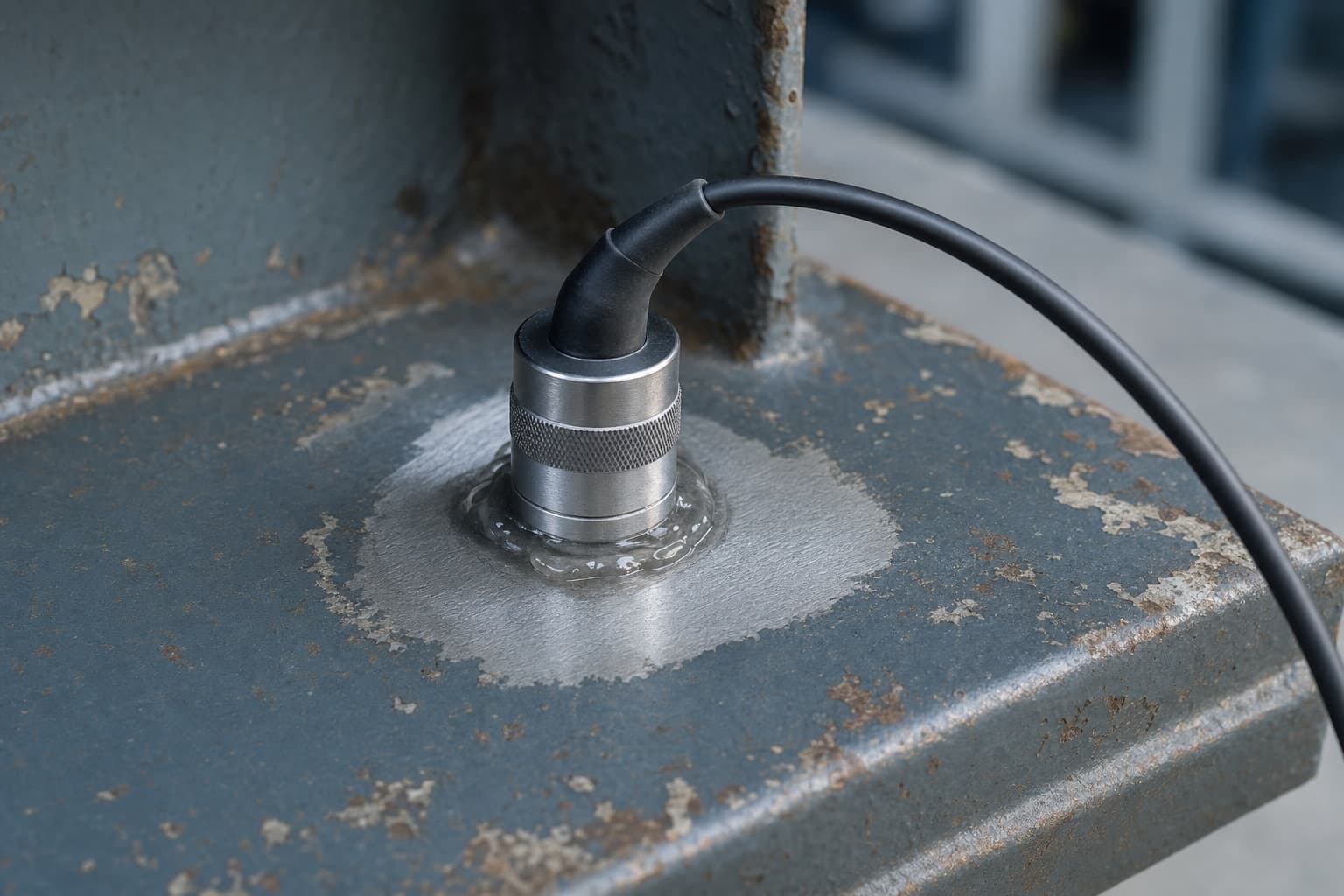
Externally, the nameplate, the shell and its supports, signs of corrosion at the bottom and around fittings, the condition of the drain, and the pressure relief valve. Internally, where an access opening allows it, the condition of the bottom and the welds. Where it does not, wall thickness is measured from outside with ultrasonic thickness readings, the method described in what thickness readings prove.
The relief valve
The relief valve is the last protection against overpressure. It must be rated for the vessel, it must not be blocked or capped, and it must be able to discharge safely. A valve that has never been tested, or one that has been replaced with whatever fitted, is a common finding. Its setting should not exceed the maximum allowable working pressure on the nameplate.
Who inspects, depending on where you are
In states with a pressure vessel program, workplace receivers may need to be registered and inspected on a schedule by a commissioned inspector, often employed by the state or by an insurance company. Small receivers can be exempt depending on size and pressure. The rules are set state by state, so the first step is to check your state’s program rather than to rely on a general answer. The same logic is set out in who inspects what.
Signs that a receiver should be taken out of service
Visible pitting or rust through at the bottom, bulging, leaks at seams, a missing or illegible nameplate, or a relief valve that cannot be verified. A receiver with no nameplate cannot be shown to meet any code, and most inspectors will not accept it. Welding repairs on a pressure vessel are not a maintenance task: they are done under the code by authorized repairers, or not at all.
How this relates to storage tanks
Atmospheric storage tanks, the main subject of this site, are inspected under API 653 or STI SP001. Receivers are pressure vessels under a different code and a different authority. What they share is the method: measure, compare with the previous measurement, and set the next inspection from the corrosion rate. That logic is described on corrosion and NDT.
A simple routine that prevents most failures
Drain the receiver as often as the operating conditions require, check that automatic drains actually discharge, look at the bottom and the supports when you pass by, and keep the nameplate visible. Record the relief valve checks. A logbook of those few gestures is often what an inspector asks for first, and it is the cheapest protection there is.
When a receiver is replaced, keep the old one’s nameplate data and the reason it was taken out. That record shows what the operating conditions do to steel in your installation, and it helps size the drainage and inspection routine for the one that replaces it.
Used receivers and second hand compressors
Buying a used compressor means buying a pressure vessel with an unknown history. The nameplate should be present and legible, the drain should work, and the bottom of the receiver deserves a thickness check before it goes back into service. A fresh coat of paint on the outside says nothing about the inside. If the seller cannot say how the receiver was drained, assume it was not, and plan for an inspection before relying on it.
A receiver that has never been inspected
Give its size, its age and where it is installed. Four questions, then a call.
Steel Tank Inspection is an independent reference on aboveground storage tank inspection under API 653 and STI SP001. It performs no inspections and signs no reports. It explains what an examination covers, what a compliant report has to contain, and how to verify that the inspector you are about to hire is currently certified.