July 30, 2026 · 8 min
What API 653 actually requires, in the order it requires it
Three kinds of examination on three different clocks, and the clocks are not all fixed. Understanding which one you are due for is most of the work.
API 653 is the standard for the inspection, repair, alteration and reconstruction of welded, field-erected aboveground steel storage tanks that have been in service. It is not a construction standard, which is API 650, and it does not apply to shop-fabricated tanks, which fall under STI SP001 and its category system. That distinction decides which examinations you owe and who is allowed to sign them.
Three examinations, three clocks
The routine in-service examination. Walked by an owner or operator rather than a certified inspector, frequently monthly, looking for what has changed since last time: leaks, coating failure, foundation movement, blocked drains, ponded water on the roof, corroded appurtenances. It is the cheapest inspection there is and it is the one that catches most problems, because it happens often enough to notice a trend.
The external inspection.Carried out by a certified inspector with the tank in service. Shell, roof, foundation, appurtenances, coating, and ultrasonic thickness readings where they can be taken from outside. This is the examination most owners think of as “the inspection”, and it is on a fixed maximum interval that the standard sets.
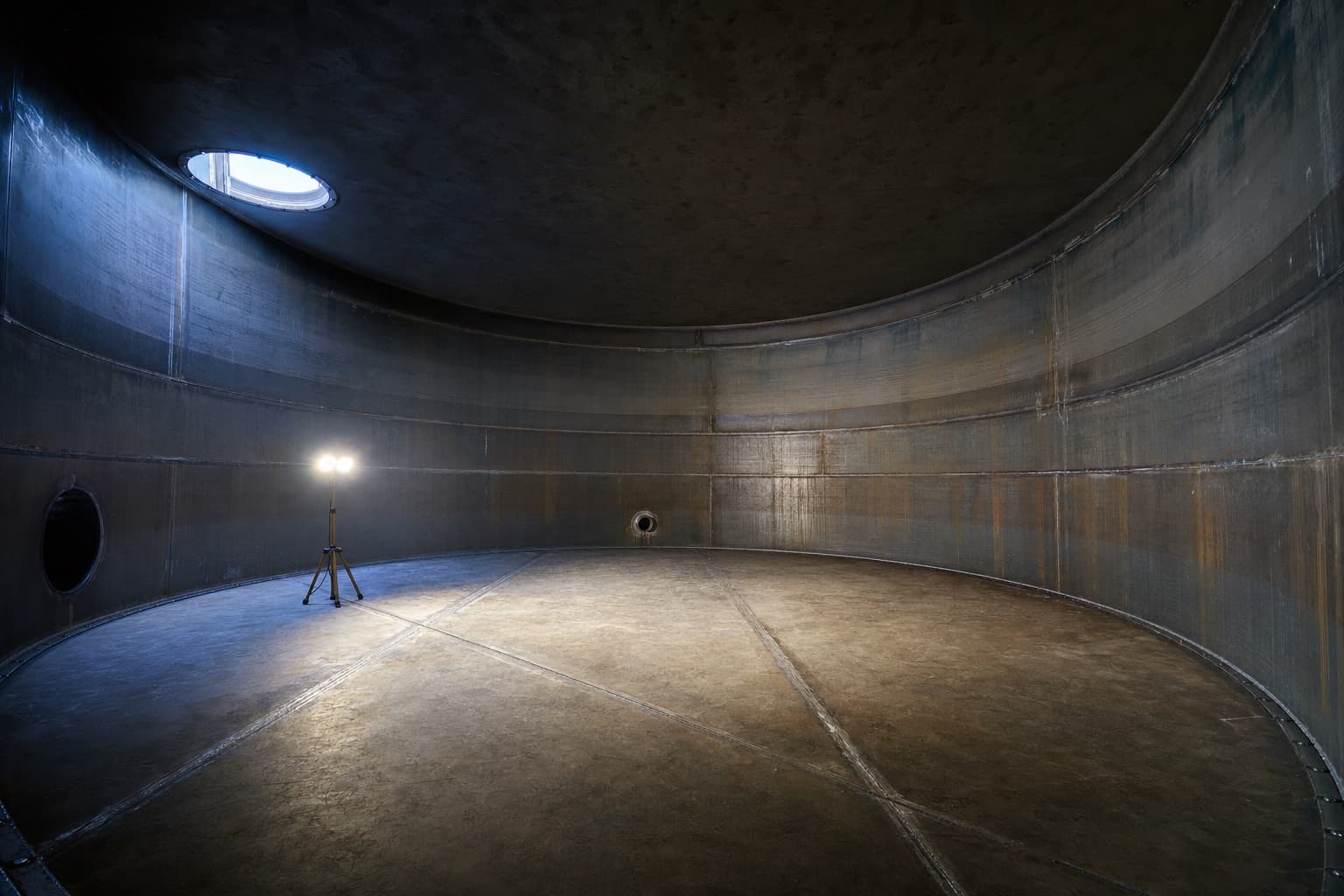
The internal inspection. Tank out of service, cleaned, gas-freed, and entered. Bottom plates examined and measured, shell examined from inside, roof structure examined, and the bottom evaluated for the corrosion that cannot be seen from outside. Expensive and disruptive, which is why the interval for it is the one most worth understanding.
The internal interval is calculated, not looked up
This is the part most often misunderstood. The maximum interval to the next internal inspection is derived from the measured corrosion rate of the bottom and the remaining thickness above the minimum, subject to a ceiling. A tank with a slow measured corrosion rate and a thick bottom earns a long interval. A tank with no measured history gets a conservative one, because nothing has been established.
The practical consequence is that data is worth money. An owner who has thickness readings going back three inspections can frequently justify a longer interval than an owner who has none, on an identical tank, which is why an inspection begins with the records rather than with the tank. The detail of how that calculation is built is on integrity assessment.
What triggers an inspection regardless of the interval
- A change of service, particularly to a product with different corrosivity.
- A repair or alteration to the shell, bottom or roof.
- Reconstruction, or relocation.
- Evidence of settlement, or a leak in the containment.
- A return to service after a period out of service.
Any of these resets the conversation, and several of them require an evaluation before the tank goes back into service rather than after.
Who is allowed to sign
The examinations that matter have to be carried out by, or under the direction of, an inspector holding current API 653 certification, and the report carries that number. A report without it is a document, not an inspection. What that certification establishes, and what it does not is worth knowing before you read a report.
Where this is jurisdiction-dependent, and it frequently is
API 653 is a consensus standard. What makes it binding is a state program, an SPCC plan, a permit condition, an insurer, or a contract, and where those requirements come from has to be assembled per tank. Which edition applies, which intervals your state has modified, and whether a state program imposes something stricter are all local questions with local answers.
Nothing on this page is a substitute for the requirement in force at your site. Confirming it is part of scoping the inspection, and it happens before the quote rather than after.
Find out which examination your tank is due for
Four questions, then a call with the drawings open. The interval depends on the history.
Steel Tank Inspection carries out API 653 and STI SP001 inspections on welded steel storage tanks: external and internal examinations, ultrasonic thickness readings, bottom evaluation, and the report the standard requires.