August 1, 2026 · 7 min
What happens during an API 653 inspection, hour by hour
The examination itself is a small part of the day. Most of an inspection is access, cleaning, measurement and the report that has to survive a regulator reading it.
People commissioning their first inspection usually expect a specialist to arrive, look at the tank and write a report. What actually consumes the time and the budget is everything around that.
Before anyone arrives: the records
The first useful hours are spent on paper. Construction drawings, the nameplate data, previous inspection reports, thickness readings, repair history, product history, any settlement survey. This is where an inspection becomes cheap or expensive, because thickness readings only mean something against previous thickness readings.
If the records do not exist, say so early. An inspection with no history is a valid inspection, it just produces a conservative result and a shorter interval, because the internal interval is calculated rather than looked up, and there is no way around that.
The external examination
Walked and measured with the tank in service. What is being looked at, in rough order:
- Foundation. Ringwall condition, grout, evidence of settlement, drainage, whether water is standing against the chime. Settlement is measured, not eyeballed, and differential settlement is the finding with the largest consequences.
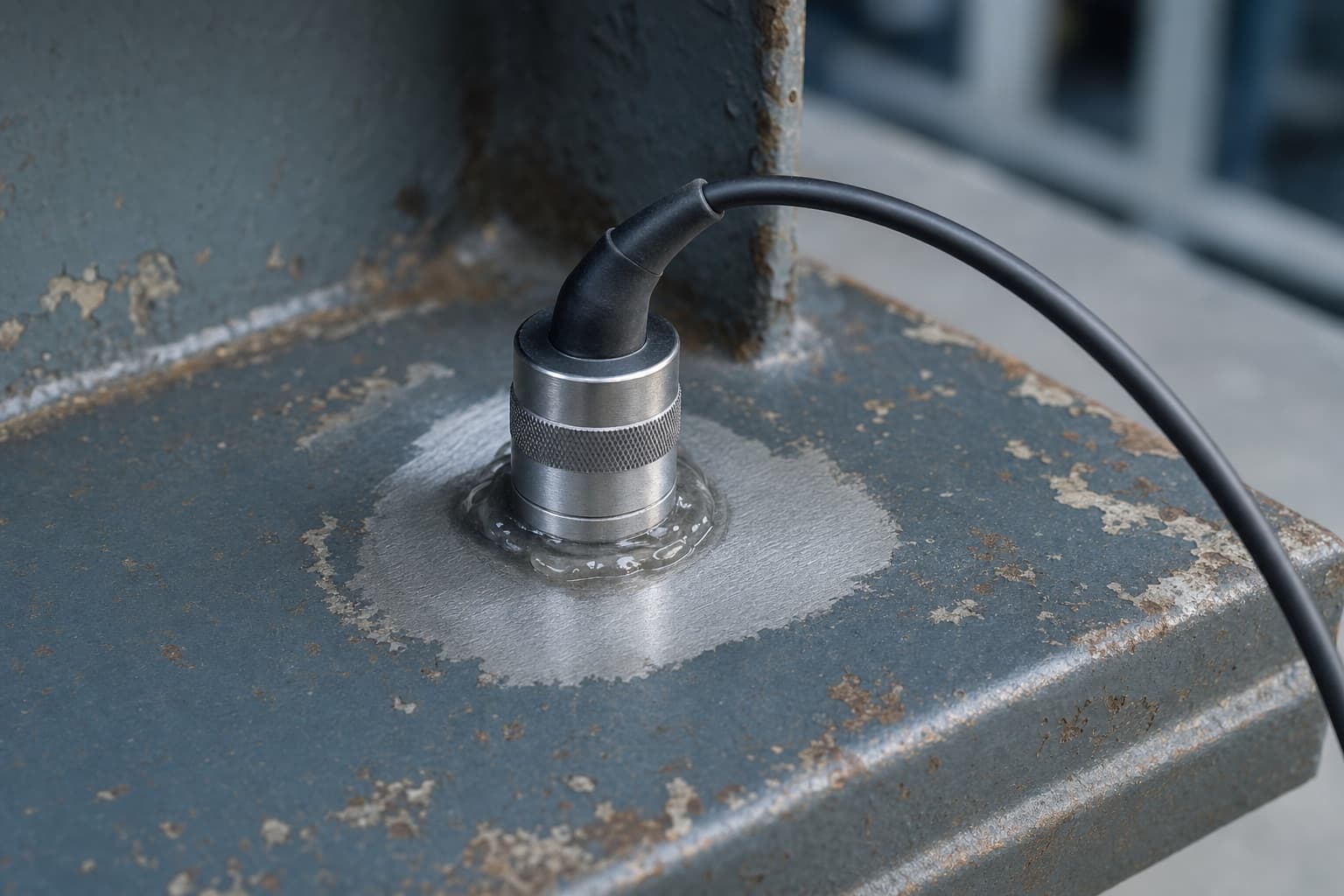
- Shell. Coating condition, corrosion, distortion, weld seam condition, and ultrasonic thickness readings on a grid that follows the courses.
- Roof. Plate condition, seams, vents, gauge hatches, and ponded water, which is both a finding and a cause of the next finding, and one of the signs that move a tank up the list.
- Appurtenances. Stairways, platforms, handrails, nozzles, manways, grounding, and whatever has been added over thirty years without a drawing.
Access decides the cost of this. A tank with a sound spiral stairway and a roof that can be walked is one day. A tank needing scaffolding, rope access or a man lift to reach the upper courses is a different quote, and it is the single largest variable. That is set out on what drives the cost.
The internal examination, if that is what is due
The tank has to be emptied, cleaned, gas-freed and certified for entry before an inspector can do anything at all. That work is frequently longer and dearer than the inspection itself, and it is not optional.
Inside, the work is bottom plates and the lower shell: thickness readings on a grid, examination of the lap welds and the shell-to-bottom weld, pit depth measurement, and an assessment of whether the bottom has been corroding from underneath. Techniques for finding what is not visible are covered under corrosion and NDT.
The report is the deliverable, and it is judged separately
What you are buying is a report that a regulator, an insurer or a buyer will accept. That means: the certified inspector’s number, the standard and edition applied, the data recorded rather than summarized, the calculations shown, the findings ranked by urgency, and a clear statement of the next due dates and how they were derived.
A report that says the tank is satisfactory without showing the numbers behind it is the one that fails when it is examined by somebody else. What a report has to contain is on inspection planning.
Get the scope written before anyone mobilizes
Access and cleaning are the expensive parts. They are scoped first, not discovered on site.
Steel Tank Inspection carries out API 653 and STI SP001 inspections on welded steel storage tanks: external and internal examinations, ultrasonic thickness readings, bottom evaluation, and the report the standard requires.