August 21, 2026 · 6 min
Aboveground storage tank inspection checklist: what the operator walk covers, and what it cannot
A checklist detects change. It does not establish condition. Knowing which of those two jobs you are doing on a given morning is what makes the walk worth the time.
The checklist queries in this category are small, 20 searches a month for this one, and they are the ones we take most seriously, because the people typing them are running a program rather than shopping for one. Here is the distinction that makes an aboveground tank checklist useful: it is one of two documents, and it only works when both exist.
Two examinations, and the checklist covers one
Every aboveground tank program has a routine walk, carried out by the owner’s own people, and formal periodic inspections, carried out with instruments and signed by someone qualified to sign. The checklist is the instrument of the first. It is not a smaller version of the second, and treating it as one is how findings get missed on both sides.
What an operator checklist generally covers
- Visible leaks, weeps and staining at welds, nozzles, valves and flanges.
- Secondary containment: standing water, the position of the drain valve, cracks.
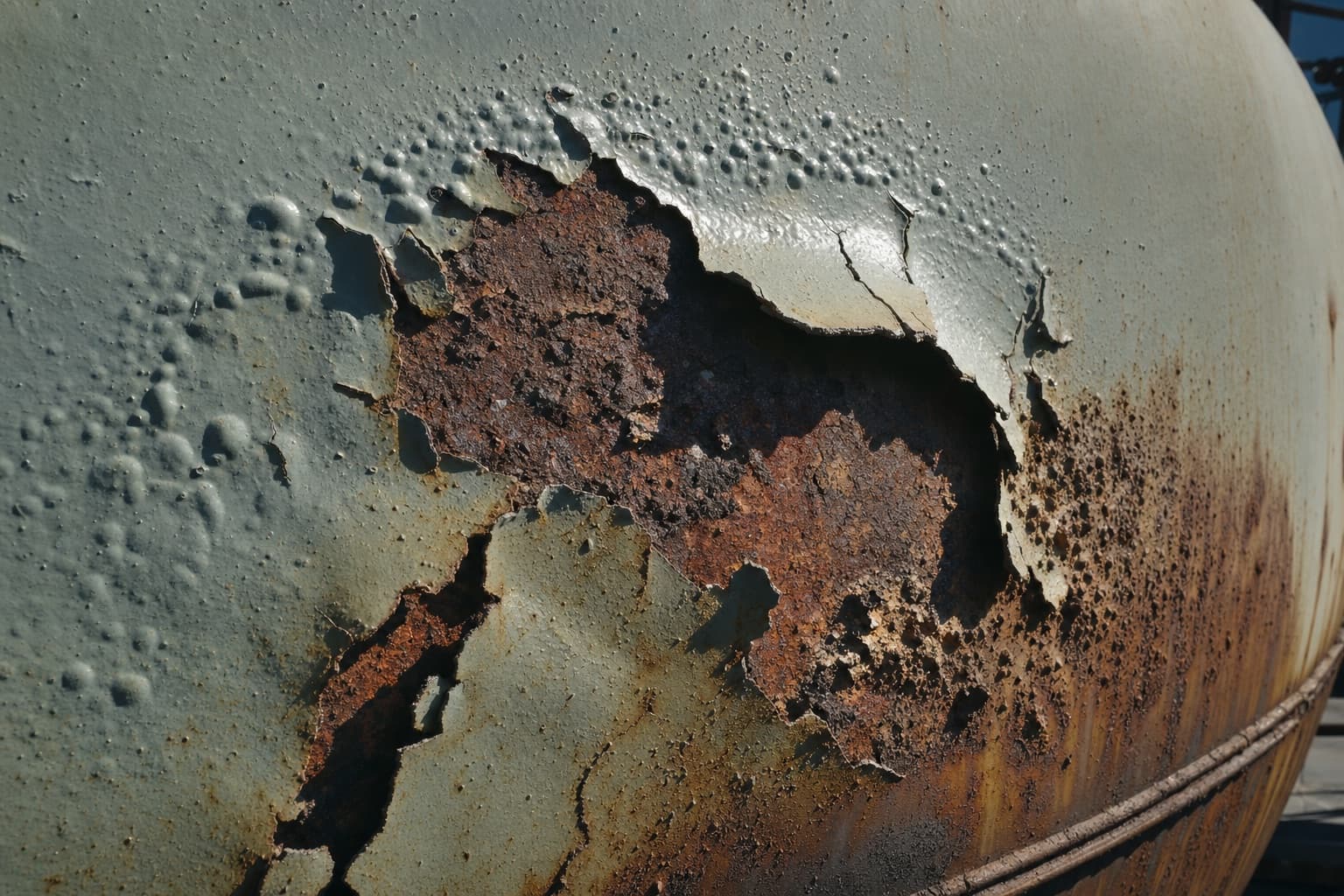
- Coating condition, particularly blistering spreading from seams and edges.
- The contact points: saddles, legs, the chime, wherever steel rests on something.
- Signs of movement: doors that no longer close, cracked grout, a stairway off level.
- Vents unobstructed, gauges readable, labels and the nameplate legible.
- Ladders, platforms and handrails, because somebody climbs them.
That is a general shape. The items that belong on your checklist depend on how the tank was built and, for a shop-fabricated tank, on the category assigned under STI SP001, which is covered in the article on SP001 categories and decides more than any generic form can know.
What the checklist deliberately leaves out
Numbers. A walk produces no thickness readings, no settlement survey, no corrosion rate. It can tell you the coating is failing at a seam; it cannot tell you what remains under it. A checklist detects change. It does not establish condition, and a program built only on checklists has no trend to defend when a regulator or an insurer asks for one.
What a formal inspection adds
Measurement against a calculated minimum, a corrosion rate established against previous readings, a derived next due date, and a signature that carries a qualification. The external examination is described on external tank inspection, and the calculation that turns readings into dates on integrity assessment. The checklist decides when to bring that work forward. It never replaces it.
Making the walk worth doing
The same route every time, dated and signed, findings recorded even when they are small, a photograph of anything that is changing, and one comparison made deliberately: this month against last month. A checklist on which no finding has ever been recorded is not evidence of a healthy tank. It is evidence of a form.
The downloaded checklist trap
A generic form can miss the items your tank’s category requires and fill the page with items that do not apply, and both errors cost attention. Which edition of the standard your program is written against, and what your state or your SPCC plan adds, shape the list, and both are worth confirming once rather than assuming for years.
When a tick becomes a phone call
Water standing against the chime, coating lifting from a weld seam, any change in the shape of the tank, a seep at a contact point. Each of these is evidence that moves a tank up the list, and each is cheaper to look at on your schedule than on the finding’s.
Have the checklist checked once
One visit confirms the category and the items worth walking. The list gets shorter and better.
Steel Tank Inspection carries out API 653 and STI SP001 inspections on welded steel storage tanks: external and internal examinations, ultrasonic thickness readings, bottom evaluation, and the report the standard requires.