September 7, 2026 · 7 min
Oil tank inspection: one search, three very different jobs
The largest servable query in this category covers a terminal tank, a basement heating tank and a buried tank in a backyard. Only one of the three is our work, and knowing which you have saves everyone a week.
`oil tank inspection` is searched a thousand times a month, which makes it the largest query we can honestly answer in this category. The difficulty is that the words describe three different jobs, done by three different trades, under three different sets of rules. This page separates them, because a caller who has the wrong one of the three on the phone loses a week finding that out.
The commercial storage tank
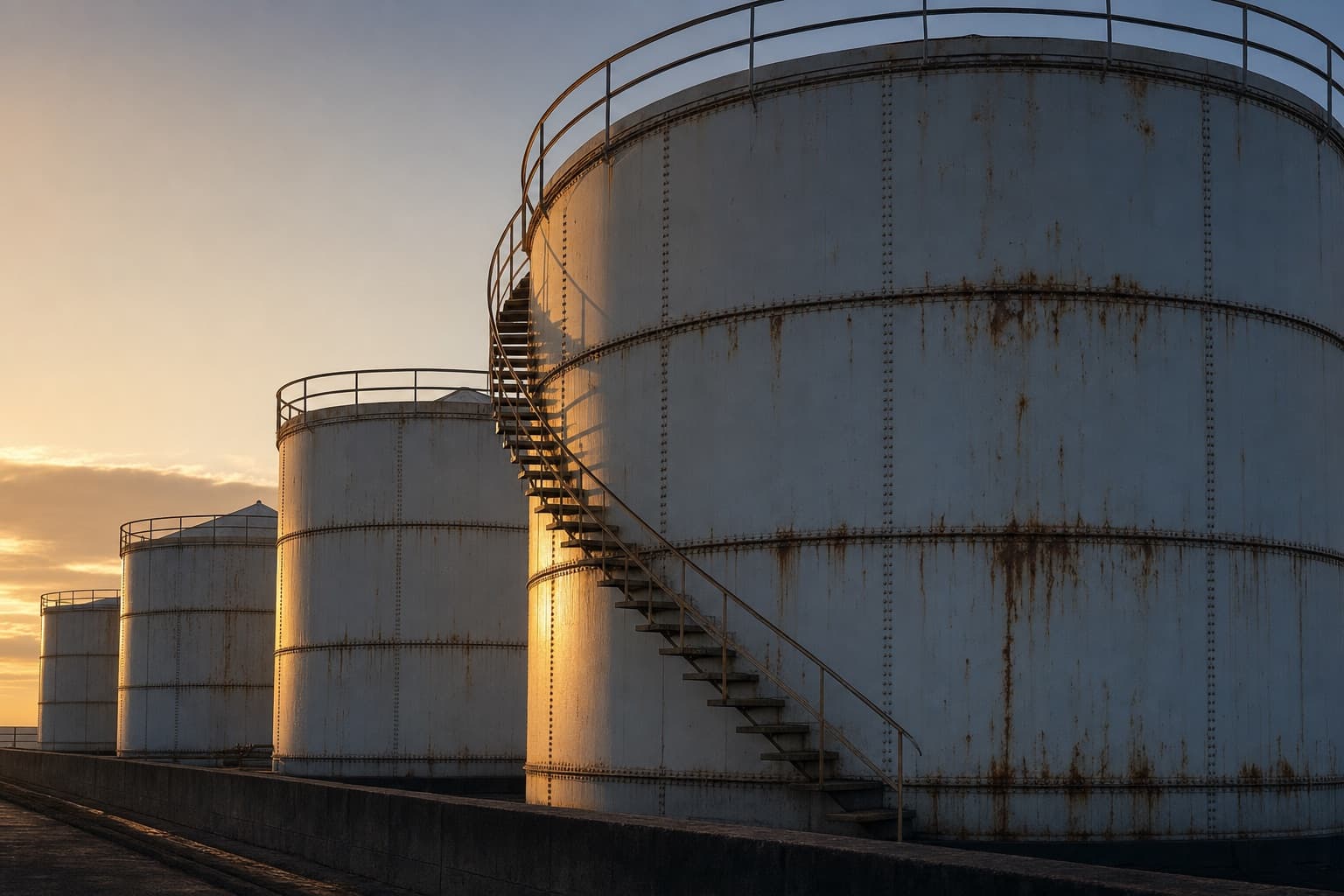
A welded steel tank at a terminal, a bulk plant, an airport, a power station or an industrial site, holding crude, refined product or lubricants. This is the tank the API 653 standard exists for, and it is the work described across this site, starting with aboveground tank inspection.
The discipline here is examination and measurement: thickness readings against a calculated minimum, a corrosion rate established against previous readings, a settlement check, and a report that derives the next due dates rather than asserting them. What each examination involves, and on what logic the intervals are derived, is set out in what API 653 actually requires.
The home heating oil tank
A few hundred gallons in a basement, a garage or beside the house, feeding a furnace. This is not API 653 work and we do not do it. It is real work all the same: these tanks corrode, mostly from the inside where water settles at the bottom, and a leak into a basement or the ground beside a house is a genuinely expensive event.
The people who inspect them are heating oil service companies and tank contractors, and in some states a program or an insurer sets what they look for. A later article in this series covers what a serious inspection of one looks like.
The buried tank in the yard
Many houses once heated with oil from a tank buried in the yard, and many of those tanks are still there. The search that finds this page is frequently a buyer or a seller in a real estate transaction who has been told to get the tank checked. That world is environmental: tank sweeps, soil testing, state cleanup programs, and contractors licensed for tank removal. It is a different discipline again, and it is not ours.
The same pull that measured this query measured `underground oil tank inspection` separately, at 140 searches a month and $12.53 a click, and a later article in this series answers that one on its own terms. The short version is the same as here: it is real work, it has rules, and the people who do it well are not the people who inspect terminal tanks.
How to tell which job you have
- Can you walk up to it, and is it bigger than a truck brought it? Field-erected, welded on site, commercial service: API 653 territory, our work.
- Did it arrive on a truck and feed a building’s heating?A shop-fabricated heating tank: a heating oil service company’s work. Larger shop-built tanks in commercial service are examined instead under STI SP001 and its category system.
- Is it underground, or do you suspect one is? An environmental question with state rules attached, covered in underground versus aboveground tank inspection.
Why the distinction is worth a page
The measured cost per click on this query is $8.22, which means companies are paying real money for visitors most of whom want a different trade. A company that takes the call anyway, asks questions slowly and quotes for the wrong job wastes your time and its own. The cheaper behavior, for both sides, is to sort the three jobs in the first paragraph and say plainly which one we do. The same sorting across the whole category, septic and propane tanks included, is drawn in an honest map of who inspects what.
What all three have in common
Steel, oil and water, in that order of importance. Oil does not corrode a tank; the water that settles under it does, at the bottom, where nobody is looking. That is true of a terminal tank, a basement tank and a buried one, and it is why every serious inspection of any of the three concentrates on the bottom and on the history rather than on the paint.
If yours is the commercial one
Then the useful next step is not a quote, it is the file: drawings, previous reports, thickness readings, repair history. What that file makes possible, and what its absence costs, is explained in integrity assessment. Bring what exists, and the first conversation is about your tank rather than about tanks in general.
Tell us which of the three tanks you have
If it is a commercial steel tank, we scope it. If it is not, we say so on the first call.
Steel Tank Inspection carries out API 653 and STI SP001 inspections on welded steel storage tanks: external and internal examinations, ultrasonic thickness readings, bottom evaluation, and the report the standard requires.