November 9, 2026 · 4 min
Tank inspection cameras: what remote visual inspection can show, and where it stops
Cameras on poles, crawlers, drones and submersible vehicles now reach most of a storage tank without anyone climbing or entering. What they record is surface, and a tank fails from loss of metal.
Owners reach for a camera when a tank raises a question and opening it would cost an outage: a stain at the chime, a roof that ponds water, a floor nobody has seen since the tank was built. Remote visual inspection has become a normal part of storage tank work, and the equipment has moved well beyond a flashlight at a manway. The useful question is what a camera can settle on a welded steel tank, and what it leaves for measurement.
The kinds of camera used on storage tanks
The simplest is a pan and tilt camera on a pole, lowered through a roof manway or pushed through a shell nozzle, with its own lighting. Video borescopes go through smaller openings, into nozzles, heating coils and the gap under a floating roof. Magnetic crawlers drive up the outside of the shell carrying a camera and often an ultrasonic probe. Drones fly the roof and the upper shell from outside, and inside an empty tank they replace a good part of the scaffolding. Submersible vehicles enter tanks that stay full, mostly water tanks and some product tanks, and send video from the floor.
What a camera settles well
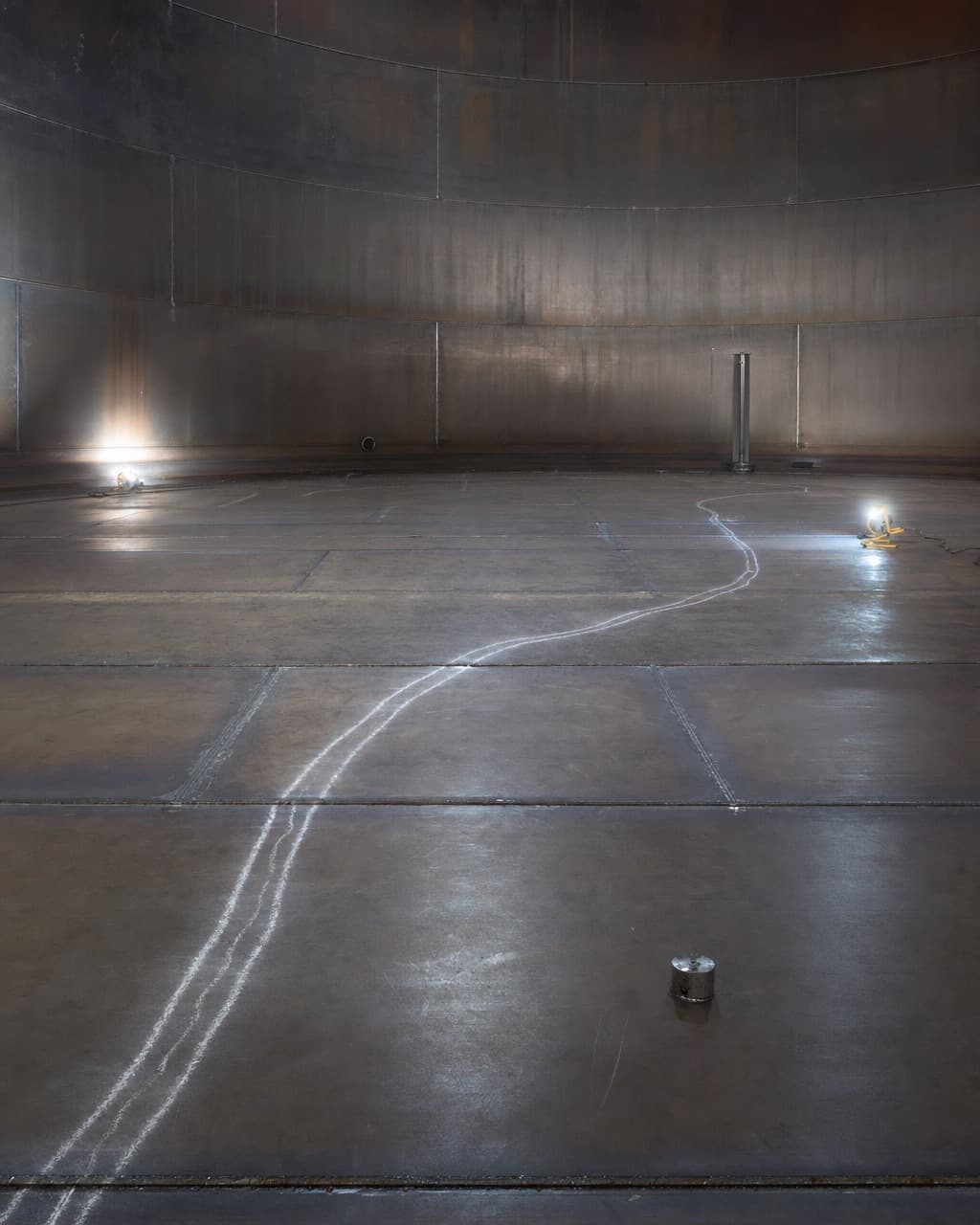
Coating failure, rust staining and blistering. Distortion of the shell, a buckled roof plate, a floating roof seal that has lifted, a broken support leg. Debris and sediment on the floor, and how much of the floor they cover. Damage to ladders, vents and gauging equipment. Signs of leakage at nozzles and at the shell to bottom joint. For these findings, good footage with a location reference is often as useful as a person standing in front of the steel, and it can be reviewed later by someone who was not on site.
What a camera cannot settle
Remaining thickness. A plate that looks sound under intact coating can have lost metal from the other side, and the floor of an aboveground tank corrodes from below, on the face that sits on the foundation. No image of the top surface shows that. Thickness comes from contact methods, spot readings or scanning, described in what thickness readings prove, and floor condition across its whole area comes from the scanning methods on corrosion and NDT. A camera tells the inspector where to measure. The measurement itself is still a separate step.
Cameras inside a tank that stays in service
Footage from a full tank depends on the product. Clear water gives usable images; crude, residual fuels and many chemicals give little or nothing, and sediment stirred up by the vehicle can blind it within minutes. Some in service vehicles carry ultrasonic sensors as well as cameras, and that is what turns a look into a partial floor survey. Coverage is the number to ask about, in whatever terms the provider reports it, together with what was not reached and why. The full internal examination remains the one described on internal tank inspection.
Hazardous atmospheres and entry
The vapor space of a fuel or solvent tank can be flammable. Any powered device lowered into it has to be suited to the hazardous area classification of the location, and that question belongs in the work permit before the camera arrives. A camera also does not make a tank safe to enter. If a person has to follow the footage inside, the tank goes back to the full confined space procedure.
Making footage worth keeping
Video only becomes a record once every frame can be placed on the tank. Each image or clip should be tied to a plate, a shell course, a bearing from a reference nozzle or a grid on the floor, so that the next inspection can return to the same spot and compare. Keep the raw files with the report, along with the date, the equipment used and the lighting. Footage of a defect that cannot be found again a few years later has lost most of its value.
Where camera work fits in the inspection
Under API 653 visual examination is part of every inspection, and remote tools extend where it can reach. They do not change who judges the result: the inspector decides what the images support, what needs measuring and whether the evidence is enough for the decision at hand. An owner who buys a camera can screen a tank between inspections and arrive at the next one with better questions. The routine outside walk that cameras support best is described on external tank inspection.
Footage of a tank and no clear answer?
Describe the tank, what it holds and what the camera showed. Four questions, then a call.
Free and with no obligation: we call you back to confirm the details, then, with your OK, your request goes to one certified inspector who covers your area and follows up with a quote.