November 16, 2026 · 4 min
Forklift propane tank inspection: the daily check and the cylinder rules
A forklift cylinder is handled more than any other propane container. That is why it is inspected by the operator every shift and by the filler at every exchange.
A propane forklift carries its fuel in a horizontal cylinder mounted at the back of the truck. Cylinders are changed often, sometimes several times a day, carried by hand, dropped, stored in cages and refilled or exchanged. Every one of those moments is a chance for damage. Inspecting a forklift propane tank is therefore a routine, not an event, and it involves the operator, the person who changes the cylinder and the supplier.
The operator’s pre shift check
OSHA’s rule for powered industrial trucks requires trucks to be examined before they are placed in service. For a propane truck, that examination includes the fuel system: the cylinder secure in its bracket, no smell of gas, no frost on fittings, the hose and coupling in good condition, and no visible damage to the cylinder. A truck with a fuel leak or a damaged cylinder is taken out of service until it has been corrected. Most sites use a written checklist so the check is recorded.
Checking the cylinder itself
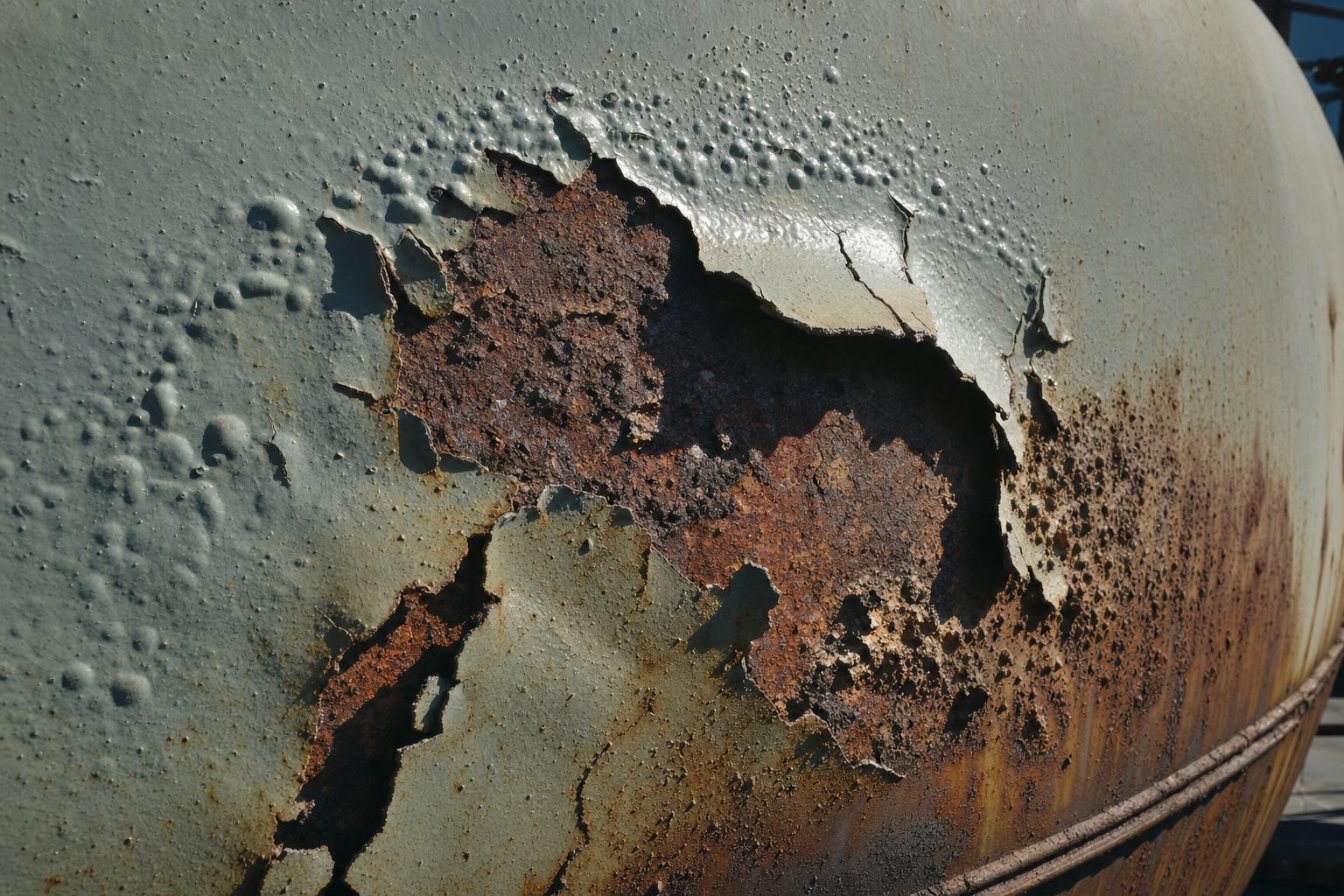
Dents, gouges, bulges, corrosion at the base or under the collar, a bent collar, a damaged foot ring and a valve that leaks or does not seal are all reasons to set a cylinder aside. So is a cylinder whose requalification date has passed: the supplier will not refill it. The dates are stamped on the collar, and how to read them is explained in reading the marks on a cylinder collar.
Mounting the cylinder the right way round
Forklift cylinders draw liquid propane, and their relief valve must sit in the vapor space at the top. A positioning pin on the bracket engages a hole in the collar to align the cylinder correctly. A cylinder mounted at the wrong angle can discharge liquid through the relief valve if it opens. Whoever changes cylinders should be trained in the procedure, should wear gloves and eye protection, and should check the coupling for leaks after connecting.
Storage between uses
Cylinders waiting for use or exchange are stored in a rack or cage, usually outdoors, away from exits, stairways and heat sources, protected from vehicles and from tampering. The LP gas code, NFPA 58, sets the storage requirements, and the local fire marshal applies them. A cage full of cylinders lying in standing water or against a dock door is the kind of finding that comes up in fire inspections.
Exchange programs and owned cylinders
Many sites use an exchange service: the supplier collects empty cylinders and leaves full ones, and is responsible for inspecting, requalifying and retiring cylinders in its pool. Sites that own their cylinders and have them refilled keep that responsibility. Either way, a cylinder that arrives damaged should be refused at delivery, not discovered on a truck.
Records that help
The pre shift checklists, a log of cylinders set aside and why, and for owned cylinders a list of serial numbers with their last requalification dates. That list shows at a glance which cylinders are due in the coming year. The broader question of keeping dates under control across many containers is covered on inspection planning, and the families of propane containers are compared in the overview of propane tank inspection.
When to stop and call the supplier
A smell of gas that does not stop when the valve is closed, frost on a cylinder that is not in use, a hissing relief valve, or a cylinder that has been dropped onto its valve. None of these is a repair for the shop floor. Move people away, keep ignition sources away, and call the supplier. Afterwards, record what happened and which cylinder was involved, so that a pattern, the same truck, the same coupling, the same delivery, shows up before it causes the next incident.
Keeping track of a cylinder fleet?
Describe the site, the number of trucks and how cylinders are supplied. Four questions, then a call.
Free and with no obligation: we call you back to confirm the details, then, with your OK, your request goes to one certified inspector who covers your area and follows up with a quote.