November 18, 2026 · 4 min
Sprinkler tank inspection: the steel tank behind a fire protection system
A fire water tank sits full and untouched for years, and has to work on the one day it is needed. Its inspection is about level, temperature, corrosion and the valves.
Where the public water supply cannot deliver the flow or pressure a sprinkler system needs, the system draws from its own water tank. Many of these tanks are welded or bolted steel, on the ground or elevated. They are rarely used, often forgotten, and expected to deliver their full volume during a fire. Inspection, testing and maintenance of fire protection water tanks are covered by NFPA 25, the standard for water based fire protection systems, as adopted by the local authority having jurisdiction.
Who sets the requirements
The authority having jurisdiction, usually the fire marshal, decides which edition of NFPA 25 applies. The property insurer often has its own requirements on top. The tank’s construction standard is typically NFPA 22, the standard for water tanks for private fire protection. Frequencies for each check are set in the edition that applies, and that text, not a general article, is the reference for a specific tank.
Water level and supervision
A fire water tank is only useful full. Level is checked regularly, and many tanks have level alarms that report to a monitored panel. Loss of level points to a leak, an open drain or a failed fill valve, and each is serious because the shortfall only matters during a fire.
Temperature and freezing
In cold climates the tank is heated to prevent freezing, and the water temperature is supervised. A failed heater can freeze a tank or its riser in a single cold spell, putting the system out of service and possibly damaging the steel. Checking the heating system and the low temperature alarm before winter is one of the most useful routines on these tanks.
The exterior
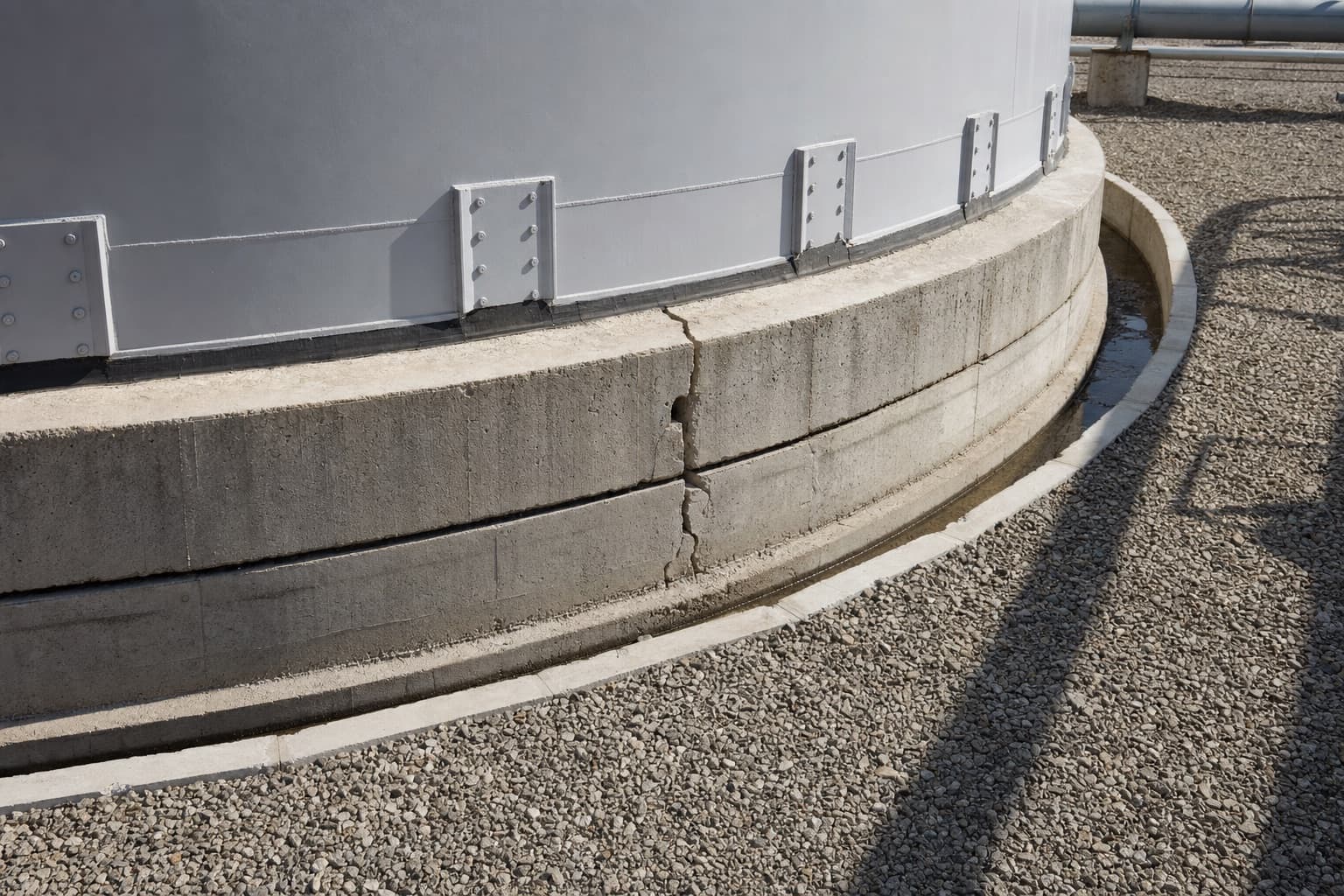
The shell, roof, foundation, ladders and vents are examined for corrosion, coating failure, leaks and damage. On ground tanks, the bottom edge where shell meets foundation collects water and debris, and it is where corrosion often starts. The foundation itself is checked for settlement and cracking. The same attention points apply to any steel tank, as described on external tank inspection.
The interior
Over time sediment collects and the interior coating degrades. Interior inspection looks for pitting, coating failure, corrosion at the bottom and at the waterline, and debris that could block the suction. It is done either by draining the tank or by divers or remote cameras with the tank full. Draining a fire tank takes a fire protection system out of service, so it is planned with the authority and the insurer, usually with temporary measures in place. The internal side is described on internal tank inspection.
Valves, piping and alarms
Control valves must be open and supervised, check valves must work, the suction screen must be clear, and alarm devices must be tested. A tank in perfect condition behind a closed valve protects nothing. These items are usually inspected by the fire protection contractor who services the sprinkler system.
How it differs from a potable water tank
A fire water tank does not usually carry drinking water, so sanitary requirements are lighter, but its availability matters more. The comparison with tanks in potable service is set out in what differs when a tank holds water. In both cases thickness readings compared with earlier readings decide how long the steel can go before repair.
Records an inspector will ask for
The log of level and temperature checks, the reports of past interior inspections with photographs, the dates the tank was drained and why, alarm test results, and any repairs to the shell, roof or coating. For an older tank whose drawings are lost, the nameplate or the original construction documents are worth tracking down, because they tell the next inspector what the tank was built to. A complete file is also what lets an owner plan the next interior inspection, rather than learn it is overdue during a fire marshal’s visit.
A fire water tank nobody has looked inside?
Give its type, its age and when it was last drained. Four questions, then a call.
Free and with no obligation: we call you back to confirm the details, then, with your OK, your request goes to one certified inspector who covers your area and follows up with a quote.