October 5, 2026 · 7 min
Oil tank inspection cost: the factors that move it, and why no honest page prints a figure
The same four words cover a domestic tank in a basement and a terminal shell. Any number published without knowing which one you have is marketing, not a price.
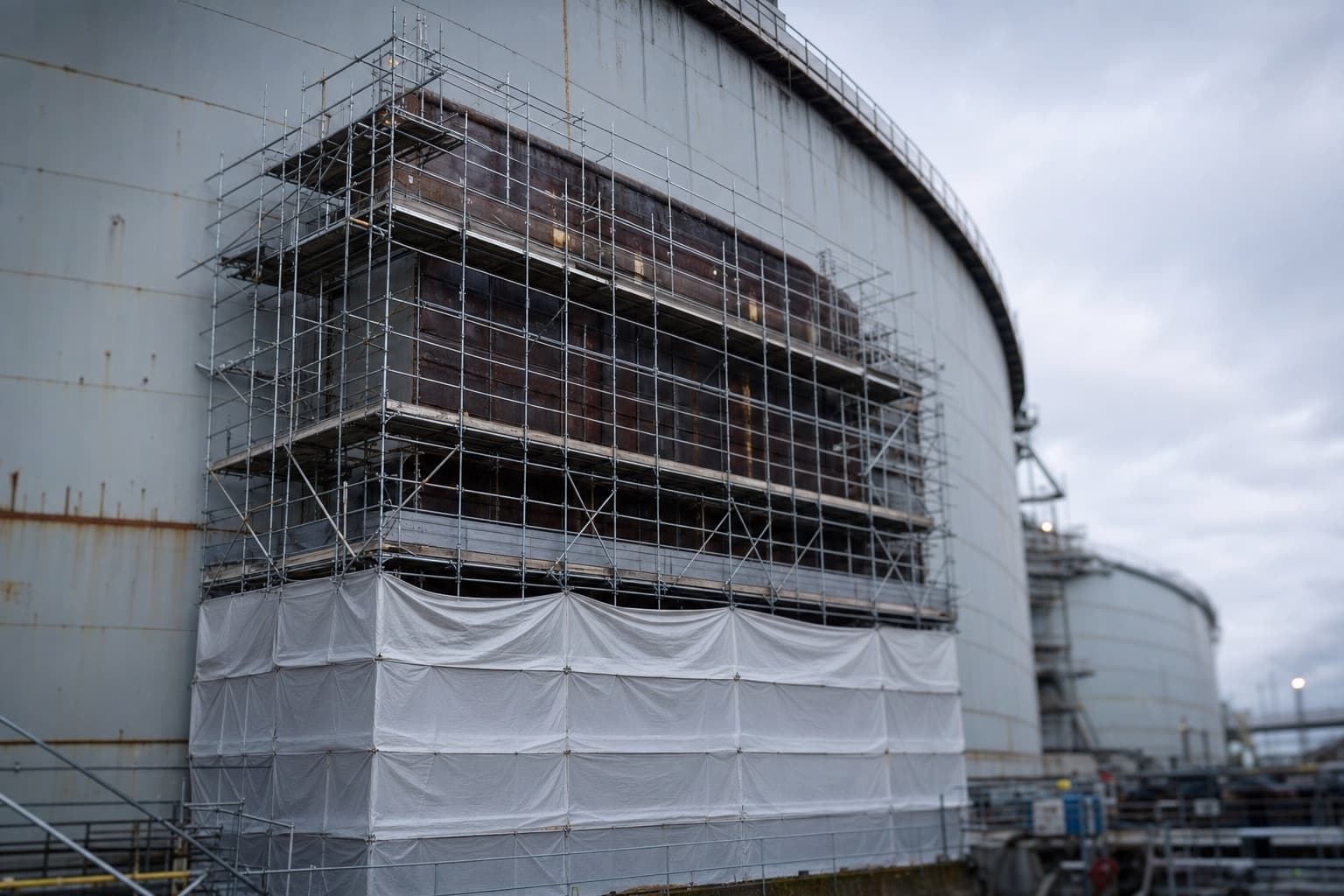
This page names the factors and gives no figure, and that is deliberate. A published number becomes an anchor against which a real quotation looks expensive, and the range here is genuinely enormous: the phrase covers a buried domestic tank, a generator day tank, and a field-erected shell that takes a crew a fortnight. The three jobs behind the phrase are separated in the article on that split.
Which kind of tank, before anything else
Domestic heating oil, underground fuel storage under a state program, and aboveground steel storage are three trades with three different qualifications and three different price structures. Nothing else on this page matters until that is settled, because the answer changes who you are even talking to. The confusion is not the buyer’s fault: search results for these four words mix all three trades on the same page, and several of the firms advertising there are happy to quote outside their own competence and sort it out on site.
In service or out of service
An external examination with the tank running is the cheaper end. An internal examination means emptying, cleaning, gas-freeing and entry, and the inspection becomes a minority of the total. Whether the tank has to come down is the single biggest lever on the number, and it is frequently decided by the calculated interval rather than by choice.
Size and access
Shell area drives the volume of readings and the time on site. Access drives the cost of getting to it: open standoff on all sides, a tank hemmed in inside a dike, or a shell that needs rope access are three different mobilizations for the same examination. Location adds a second layer: travel and accommodation for a crew, site induction requirements, permit systems and escort rules on an operating facility all consume days that never appear in the word inspection.
Who prepares the tank
On an internal examination, product removal, cleaning, gas-freeing and waste disposal can be carried out by the owner, by the inspection contractor or by a third party. All three arrangements are normal. What is not normal, and what causes most disputes, is leaving it unstated: each bidder then assumes whichever answer makes their own number look best, and the quotations stop being comparable.
What condition turns up
Findings generate work. Heavy coating failure means more surface preparation to take readings. Suspected floor loss means more scanning. Settlement means survey work. A tank with good records and a known history tends to produce fewer surprises, which is one of the practical returns on keeping the file. The reverse is also true and less obvious: a tank with no previous data cannot show a corrosion rate, so the first campaign buys a baseline rather than a trend, and the interval that follows it is set conservatively for want of history rather than for want of steel.
Cleaning and waste, the line that surprises people
Sludge removal and disposal is priced by volume and by what the material is classified as, and it is regularly the largest single item on an internal examination. It is also the item most often missing from a low bid, which is worth checking specifically rather than assuming.
The deliverable itself
A report that carries the data, the calculations and a signed conclusion costs more to produce than a checklist with photographs, and it is worth more for exactly as long as the tank keeps operating. What a report has to contain to be usable is covered in the article on what happens during an inspection, and the budgeting view is on the inspection cost page.
Get a number that is about your tank
Tank type, size, location and what prompted the inspection. Four questions, then a call.
Steel Tank Inspection is an independent reference on aboveground storage tank inspection under API 653 and STI SP001. It performs no inspections and signs no reports. It explains what an examination covers, what a compliant report has to contain, and how to verify that the inspector you are about to hire is currently certified.